Regulatory guide
Care minutes and AI in residential aged care
Care minutes measure direct care time with residents. AI cannot add a single minute to that count. What it can do is take paperwork off nurses and care workers, so more of the hours you already roster are spent with residents.
Reviewed 15 November 2026
In short
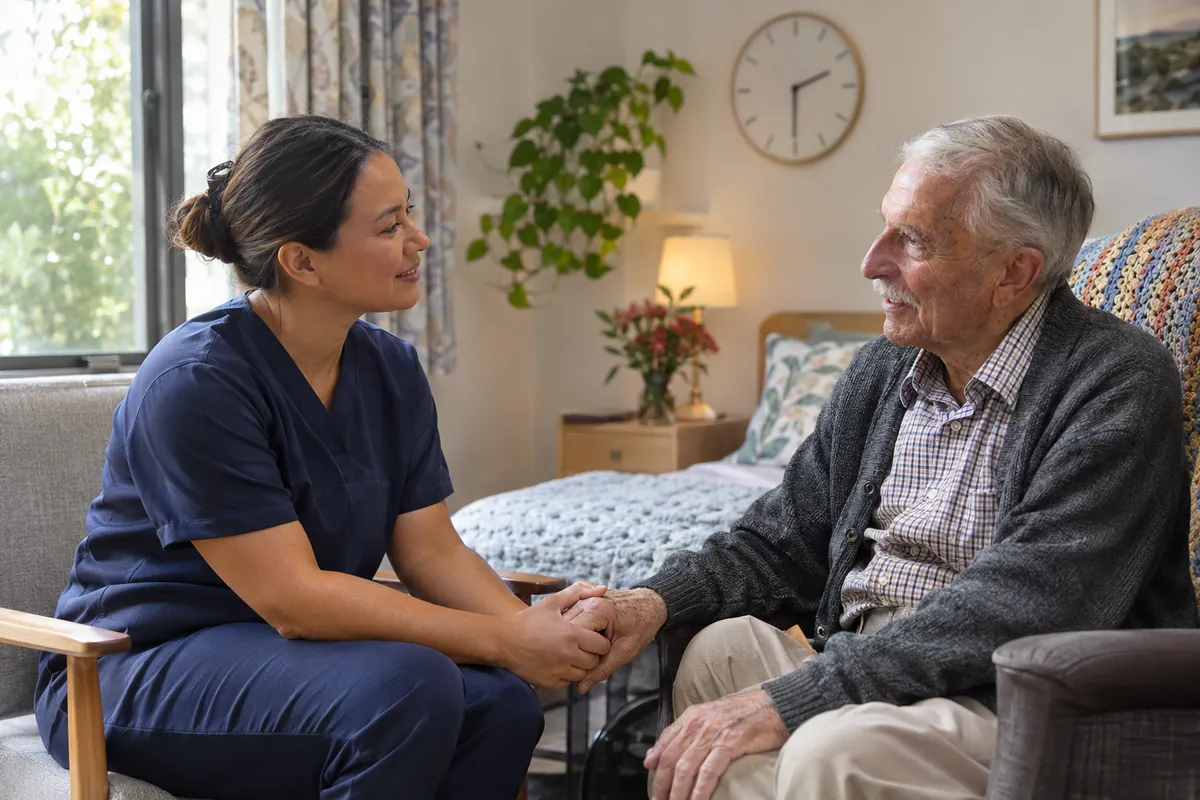
Care minutes and AI connect in one honest way: AI can reduce the admin load on registered nurses, enrolled nurses and personal care workers, which leaves more of their rostered time for direct care.
As at November 2026, residential care homes must deliver home-specific care minutes targets based on a sector-wide average of 215 minutes of direct care per resident per day, including 44 minutes from a registered nurse, and must have at least one RN onsite and on duty 24 hours a day unless an exemption applies.
Care minutes are worked out from the care hours you report in the Quarterly Financial Report, and administrative tasks are not direct care. So AI time never counts as care minutes, and AI must never be used to reclassify admin as care.
Used properly, it shortens progress notes, handover, incident forms and phone interruptions, and the time saved goes back to residents.
What the care minutes requirement is
Care minutes are the amount of direct care that people living in residential care receive from a registered nurse (RN), an enrolled nurse (EN), or a personal care worker or assistant in nursing (PCW or AIN).
The requirement is based on a sector-wide average of 215 minutes of care per resident per day, including 44 minutes of direct RN care (Department of Health, Disability and Ageing, as at November 2026). That level has applied since 1 October 2024; before that, from 1 October 2023, it was 200 minutes including 40 RN minutes.
From 1 October 2024 providers have also been able to meet up to 10% of a home's RN target with time from enrolled nurses.
Each home has its own targets, based on its residents' care needs, calculated using the method in section 176-20 of the Aged Care Rules 2025. Homes must meet them on average each quarter, across permanent and respite residents. Providers registered in Category 6 (residential care) carry the obligation, and the Aged Care Quality and Safety Commission links it to Outcome 2.8 of the strengthened Quality Standards on workforce planning.
| Requirement | What it says | Since |
|---|---|---|
| Care minutes, total | Home-specific targets based on a sector-wide average of 215 minutes per resident per day | 1 October 2024 (200 minutes from 1 October 2023) |
| Care minutes, RN | 44 of those minutes from a registered nurse, sector-wide average | 1 October 2024 (40 minutes from 1 October 2023) |
| EN flexibility | Up to 10% of a home's RN target can be met by enrolled nurses | 1 October 2024 |
| 24/7 registered nurse | At least one RN onsite and on duty at all times at each home, unless exempt | 1 July 2023 |
| Reporting | Care hours reported through the Quarterly Financial Report; new externally audited Care Minutes Performance Statement | Statement starts with the Aged Care Financial Report 2025 to 26 |
The 24/7 registered nurse requirement
Since 1 July 2023, at least one registered nurse must be onsite and on duty at all times at each approved residential care home. Eligible homes in rural and remote areas can apply to the department for an exemption of up to 12 months at a time. The department also manages monthly 24/7 RN reports from providers and checks the accuracy of reported RN and care minutes information.
For an RN alone on a night shift, admin is a safety issue as well as a time issue. Every phone call from a family, every incident form and every handover note is time away from the floor. That is where AI help is most worthwhile, and also where its limits must be clearest: AI does not count as RN presence, cannot cover any part of the 24/7 requirement and does not make clinical calls.
Where admin time goes on a shift
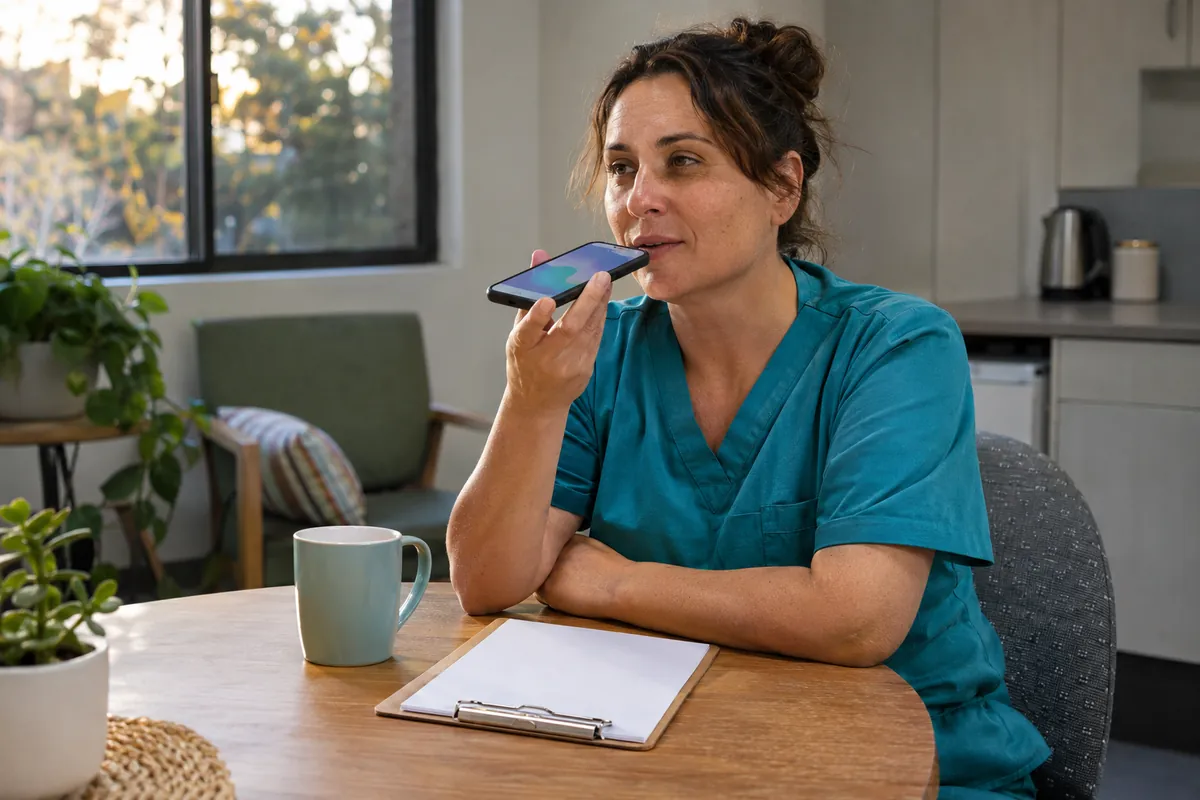
Ask any RN in charge where the time goes and the list is consistent: progress notes at the end of a shift, handover preparation, incident and SIRS paperwork, phone calls from families, GPs, pharmacies and hospitals, chasing a casual to fill a gap, and answering questions from agency staff who do not know the home. Care workers spend time on documentation, looking up procedures and passing on messages.
The department is clear that admin is not direct care. Its Monthly Care Statements guidance, for example, says clinical review of a statement and follow-up conversations with a resident count towards care minutes when done by an RN, EN or PCW, but administrative tasks such as preparing, quality checking and distributing statements do not, "because they are not direct care activities" (as at November 2026). So every minute a nurse spends on paperwork is a rostered minute that cannot count as care.
As an illustration of the scale: in a 90-bed home, if each of 3 RNs across the day spends 60 minutes a shift on documentation and phone messages that could be shortened by a third, that is 60 RN minutes a day returned to the floor, or about 0.7 extra minutes of potential RN time per resident per day. The arithmetic is 3 x 60 x 1/3 = 60 minutes, divided by 90 residents. Your numbers will differ. Measure them before and after.
Apply this to your service
Talk it through with a Yes AI consultant in a free 30-minute call, including whether AI fits your service at all.
How AI can reduce admin load for nurses and care workers
The useful AI tools for care staff are small and specific. Each one saves a few minutes, many times a shift. Each needs a qualified person to check the output.
- Progress note drafts from a care worker's spoken or brief written input, checked and edited by the worker before saving
- Handover summaries drafted from the shift's notes, reviewed by the RN giving handover
- Incident form checks that flag missing fields before the form reaches the clinical lead, with the RN deciding whether an incident is reportable
- Phone answering for routine family and supplier calls, with urgent calls transferred to the RN and messages delivered in writing
- Shift-fill messaging that reaches all eligible casual staff at once when someone calls in sick
- A policy assistant that answers "how do we do this here" questions from the home's own procedures
What AI must not do with care minutes
There are two lines that should never be crossed. First, AI activity is not care. An AI phone call to a family, a chatbot conversation with a resident or an AI-generated activity is not care time from an RN, EN or PCW and cannot be reported as such.
Second, AI must not be used to make the reported figures look better than the care delivered. Care minutes are determined from the care hours you report in the QFR, the department runs assurance activities to check the accuracy of that data, and the new Care Minutes Performance Statement must be externally audited.
Reclassifying admin hours as care hours, with or without software, is misreporting.
Care minutes also come with consequences.
The Commission may act on non-compliance, the department publishes care minutes performance for individual homes each quarter, and from 1 April 2026 some care funding for non-specialised homes in metropolitan areas (MM 1) has been linked to care minutes delivery through the care minutes supplement.
Accurate reporting from your own rostering and payroll systems is the only safe basis. AI can help managers see a monthly view of care hours against targets sooner, using figures from those systems. It should not calculate or adjust the official numbers.
Measuring whether freed time reaches residents
Saving admin time only matters if it becomes care time. Measure three things before and after any AI tool goes live: time spent on the admin task (sample a few shifts), the home's care minutes against target from your own QFR data, and what residents and families say. If documentation time drops but care minutes stay flat, the time is going somewhere else, and the roster or the work allocation needs attention.
Talk to staff about this openly. Nurses and care workers are rightly wary of tools sold as "efficiency" that turn into reduced hours. Be clear that the aim is more time with residents within the same rostered hours, and report the results back to them.
How it works in practice
- 1
Sample admin time
Track how RNs and care workers spend a few shifts, by task, to find the largest admin blocks.
- 2
Pick one task
Choose the admin task with the most time and the lowest clinical risk, often progress notes or phone messages.
- 3
Set the review rule
Decide who checks each AI output and how that check is recorded.
- 4
Run a trial
Use the tool on one wing or shift pattern for four to six weeks and record time saved.
- 5
Check care time
Compare care minutes from your own systems and resident feedback before and after, then decide whether to extend.
Common questions
What is the care minutes requirement in residential aged care?
Each home has its own targets based on a sector-wide average of 215 minutes of direct care per resident per day, including 44 minutes from a registered nurse, as at November 2026. Homes must meet their targets on average each quarter.
Does AI time count towards care minutes?
No. Care minutes are direct care from RNs, ENs and PCWs or AINs. AI activity is not care time and must never be reported as care minutes.
Does admin time count as care minutes?
No. The department treats administrative tasks as not direct care. Its Monthly Care Statements guidance, for example, excludes preparing and distributing statements while counting clinical review and conversations with the resident.
When did the 24/7 registered nurse requirement start?
On 1 July 2023. At least one RN must be onsite and on duty at all times at each residential care home. Eligible rural and remote homes can apply for exemptions of up to 12 months at a time.
How can AI help a home meet its care minutes target?
Indirectly, by shortening admin tasks such as notes, handover and phone messages so nurses and care workers spend more rostered time with residents, and by filling shifts faster. It does not change what counts or how it is reported.
How are care minutes reported?
Care minutes are determined from the care hours you report in the Quarterly Financial Report. From the Aged Care Financial Report 2025 to 26, providers also prepare an externally audited Care Minutes Performance Statement.
Sources and further reading
- Care minutes in residential aged care (Department of Health, Disability and Ageing)
- 24/7 registered nurse requirement (Department of Health, Disability and Ageing)
- Aged care reforms and reviews delivered (Department of Health, Disability and Ageing)
- Monthly Care Statements (Department of Health, Disability and Ageing)
- 24/7 registered nurse and care minutes obligations (Aged Care Quality and Safety Commission)
Related pages
AI Progress Notes for Aged Care
Progress notes are often written at the end of a long shift, from memory, by a tired care worker. AI drafting lets the worker speak or type what happened in their own words and get back a clear, objective draft to check, correct and approve.

Rostering and Shift Fill
A care worker calls in sick before an early shift. Someone has to log it, find a replacement and keep the floor covered, usually the RN in charge who is also starting the medication round. AI takes the sick call, messages the eligible casuals and tells the roster coordinator who has accepted.

Residential Aged Care
A residential aged care home runs around the clock, but its office runs business hours and its nurses are busy with residents. AI can take the repeated admin around handover, family contact, admissions, rosters and reporting, so staff time goes back to the floor.

Reporting Automation
Quarterly financial reports, care minutes, quality indicators, board packs: much of an aged care finance and quality team's quarter goes into pulling data out of several systems, checking it and putting it into the right format. Automation can do the gathering and checking so your people spend their time on review and sign-off.
Talk it through with us
A free 30-minute video call about where admin time goes in your service and which task is worth automating first. No obligation, and no resident information needed.